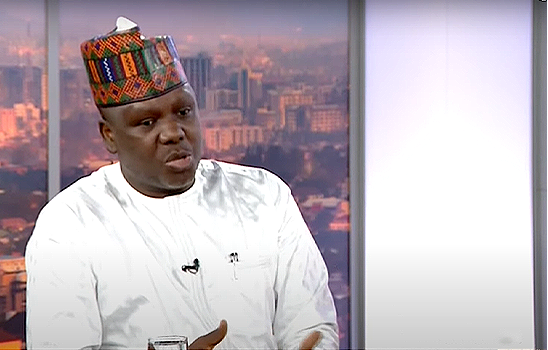
Special Adviser to President Bola Tinubu on Policy Communication, Daniel Bwala, has suggested that the recent surge in insecurity across Nigeria may be connected to comments made by United States President Donald Trump. Bwala made the assertion during an appearance on Channels TelevisionâÂÂs The Morning Brief on Wednesday, describing the period as one of the most challenging phases the country has faced in recent years.
According to him, analysts have put forward two dominant theories regarding the spike in security breaches. The first, he explained, is that violent incidents often intensify as Nigeria approaches an election cycle, a pattern observed in previous years. The second, and increasingly debated theory, is that the wave of attacks may have been triggered or emboldened by TrumpâÂÂs public accusations against the Nigerian government.
Bwala noted that after TrumpâÂÂs âÂÂinitial outburst,â the country began experiencing more frequent security incidents, a trend some believe could be an attempt to validate discussions around possible US-led military intervention. Trump had last month redesignated Nigeria as a âÂÂcountry of particular concern,â alleging that the government was allowing what he termed âÂÂChristian genocide.âÂÂ
The former US president went further to warn that Washington might intervene militarily if Abuja fails to urgently address the unrest and âÂÂfish outâ those responsible for the violence. His remarks prompted the US Congress to convene two separate sessions, following TrumpâÂÂs directive to the House Appropriations Committee on October 31 to probe alleged religious persecution in Nigeria.
While addressing these developments, Bwala stressed that the Nigerian government is taking both domestic and international concerns seriously. He said the administration remains committed to ending the security crisis, acknowledging that citizens are living through real insecurityâÂÂnot just reputational challenges abroad.
He also highlighted NigeriaâÂÂs complex geography and demography as major obstacles to effective security operations. Using Niger State as an example, Bwala pointed out that the region is geographically larger than some European countries, making surveillance and law enforcement difficult. He added that the northern part of the country presents additional challenges due to the vast distances between major cities, unlike the south where communities are more closely connected.
âÂÂLarge expanses of land have little or no population and no government presence. These are the areas where these elements hide and operate from,â he said.
Bwala reaffirmed the governmentâÂÂs commitment to restoring safety across the country, insisting that ongoing efforts will address both local security gaps and the growing international narrative surrounding NigeriaâÂÂs internal challenges.
News
Tinubu’s Aide Links Rising Insecurity to Trump’s Remarks, Warns of Misleading Narrative Around Nigeria’s Security Crisis
Special Adviser to President Bola Tinubu on Policy Communication, Daniel Bwala, has suggested that the recent surge in insecurity across Nigeria may be connected to comments made by United States President Donald Trump...